

Research background
Tirzepatide: Mechanism & Published Research
Tirzepatide is a synthetic dual agonist of the glucose-dependent insulinotropic polypeptide receptor (GIPR) and the glucagon-like peptide-1 receptor (GLP-1R). Developed as a once-weekly subcutaneous peptide, it has been the subject of extensive published clinical research under the brand study names SURPASS and SURMOUNT, positioning it as one of the most-studied dual incretin agonists in the literature.
In the published pharmacology literature, researchers have described tirzepatide’s GIPR agonism as a key differentiator from GLP-1 mono-agonists. The GIPR component is thought to enhance insulin secretion in a glucose-dependent manner, suppress glucagon, and modulate adiponectin levels in adipose tissue. Combined with GLP-1R agonism — which suppresses appetite via hypothalamic signaling and slows gastric emptying — the dual mechanism has attracted significant research interest in metabolic and body composition studies.
Tirzepatide shares structural features with native GIP, including an N-terminal Tyr-Aib dipeptide modification that confers resistance to dipeptidyl peptidase-4 (DPP-4) degradation, and a C-18 fatty diacid conjugate via a linker that promotes albumin binding. The published half-life in human pharmacokinetic studies is approximately five days, enabling the once-weekly dosing protocols studied in clinical trials.
Dose-ranging studies in the published literature have examined tirzepatide from 1 mg up to 15 mg per week in human cohorts. Researchers have also examined its effects on non-alcoholic fatty liver disease biomarkers, cardiac function parameters, and sleep apnea endpoints in separate study arms, reflecting the breadth of metabolic research interest in this compound class.
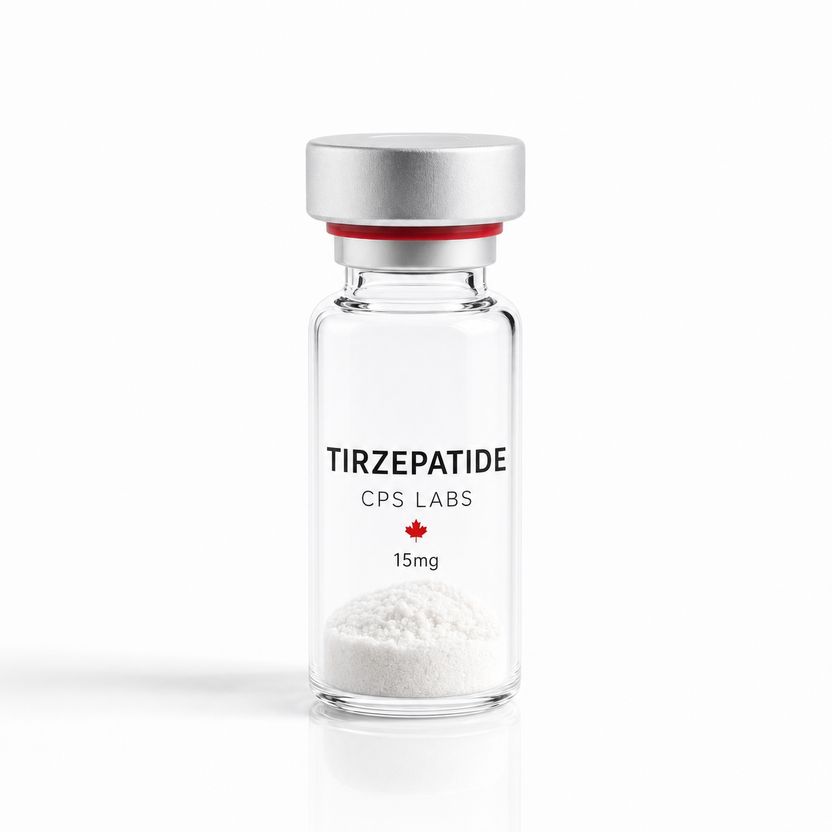
Canada Peptide Supply offers tirzepatide as lyophilized powder in multiple doses (5 mg to 60 mg per vial), independently verified at ≥99% purity by HPLC and mass spectrometry. Tirzepatide is not approved by Health Canada for research investigational purposes outside of authorized clinical trials and is sold strictly for in-vitro laboratory research.
Research Use Only Disclaimer: All information on this page is provided for scientific reference purposes. Canada Peptide Supply does not provide medical advice. Tirzepatide is sold strictly for in-vitro laboratory research by qualified investigators. It is not approved by Health Canada for human consumption, diagnosis, treatment, or prevention of disease.
