

Research background
BPC-157: Mechanism & Published Research
BPC-157 (Body Protection Compound-157, CAS 137525-51-0, molecular formula C62H98N16O22, molecular weight 1419.5 g/mol) is a synthetic pentadecapeptide derived from a sequence within human gastric juice protein. It was first isolated and characterized in the early 1990s and has since accumulated an extensive body of pre-clinical research across gastrointestinal, musculoskeletal, neurological, and vascular research models.
In the published literature, researchers studying tendon and ligament models have described BPC-157’s effects on fibroblast proliferation and migration, tendon-to-bone healing, and collagen organization. Investigators working in rodent models have reported accelerated healing rates in transected Achilles tendon and medial collateral ligament models following BPC-157 administration. The peptide has been observed to upregulate growth hormone receptor expression in tendon fibroblasts, potentially contributing to its tissue-repair effects.
Gastrointestinal research — the original context for BPC-157’s discovery — has examined its cytoprotective effects in models of gastric ulceration, inflammatory bowel disease, and gut permeability. Researchers have described effects involving nitric oxide synthase modulation, prostaglandin synthesis, and VEGF-mediated angiogenesis in GI tissue models.
The published pharmacokinetic data for BPC-157 is limited compared to its mechanistic literature. The peptide is commonly studied via subcutaneous, intraperitoneal, or oral administration in rodent models. Researchers note that the compound is resistant to degradation in gastric juice, consistent with its origin from a stomach protein.
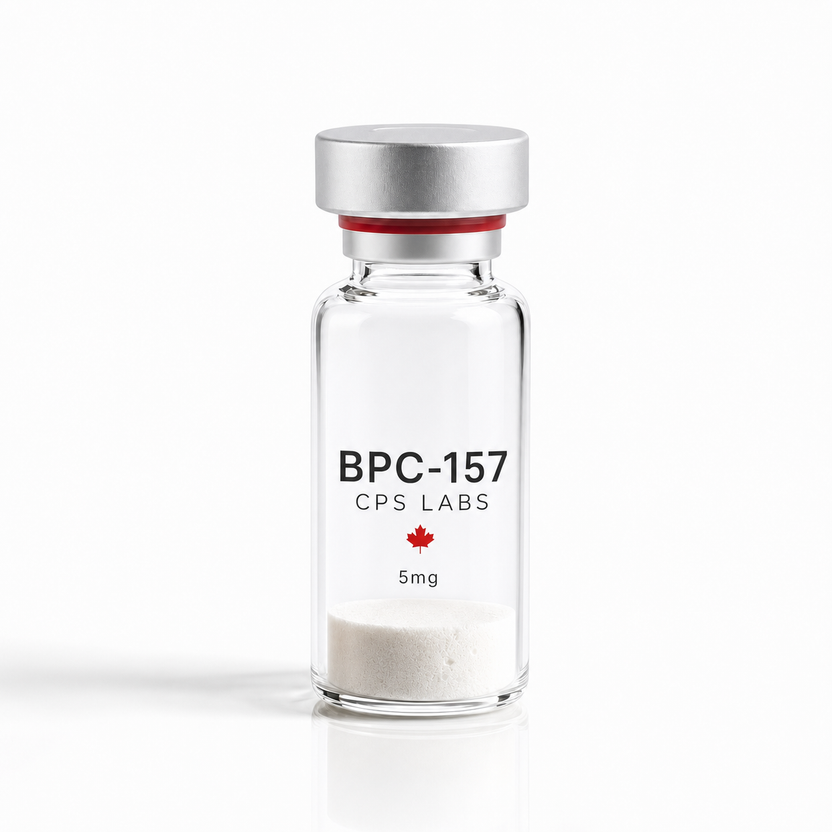
Canada Peptide Supply offers BPC-157 in 5 mg and 10 mg lyophilized vials, ≥99% HPLC-verified with mass spectrometry identity confirmation. The material is supplied as the acetate salt (BPC-157 acetate), the standard research form. Standard reconstitution for research purposes uses bacteriostatic water. BPC-157 has not been approved by Health Canada for human therapeutic use and is sold exclusively for in-vitro research.
Research Use Only Disclaimer: All information on this page is provided for scientific reference purposes. Canada Peptide Supply does not provide medical advice. BPC-157 is sold strictly for in-vitro laboratory research by qualified investigators. It is not approved by Health Canada for human consumption, diagnosis, treatment, or prevention of disease.
