

Research background
TB-500: Mechanism & Published Research
TB-500 is a synthetic peptide representing the critical actin-sequestering domain of Thymosin Beta-4 (Tβ4), a 43-amino-acid protein expressed ubiquitously across mammalian tissues. The full Thymosin Beta-4 protein has been the subject of extensive published research since its initial isolation from calf thymus in the 1960s, with its actin-binding fragment (the sequence Ac-SDKPDMAEIEKFDKSKLKKTE-PNTQR) subsequently identified as the bioactive domain for many of the observed tissue effects.
In the published literature, researchers studying musculoskeletal models have described TB-500’s effects on actin polymerization dynamics. By sequestering G-actin monomers (beta-actin) and modulating the actin cytoskeleton, the peptide has been observed to promote cell migration, proliferation, and differentiation in fibroblast and endothelial cell models. Investigators studying wound healing models have reported accelerated wound closure in both in-vitro scratch assays and in-vivo rodent models.
Cardiac research has examined TB-500 extensively as a potential modulator of cardiomyocyte survival and regeneration. Published studies have investigated its effects on cardiomyocyte progenitor mobilization, VEGF-mediated angiogenesis, and inflammatory cytokine modulation following ischemia-reperfusion models in rodents. Researchers have described dose-dependent effects at nanomolar concentrations in cell models.
TB-500 is frequently co-administered with BPC-157 in published pre-clinical research examining connective tissue healing, as the two compounds appear to operate via complementary pathways — BPC-157 primarily through nitric oxide and VEGF signaling, and TB-500 primarily through actin cytoskeletal dynamics and cell migration. The published literature on their combined use in rodent models has contributed to TB-500 becoming one of the most commonly requested companion compounds to BPC-157 among research investigators.
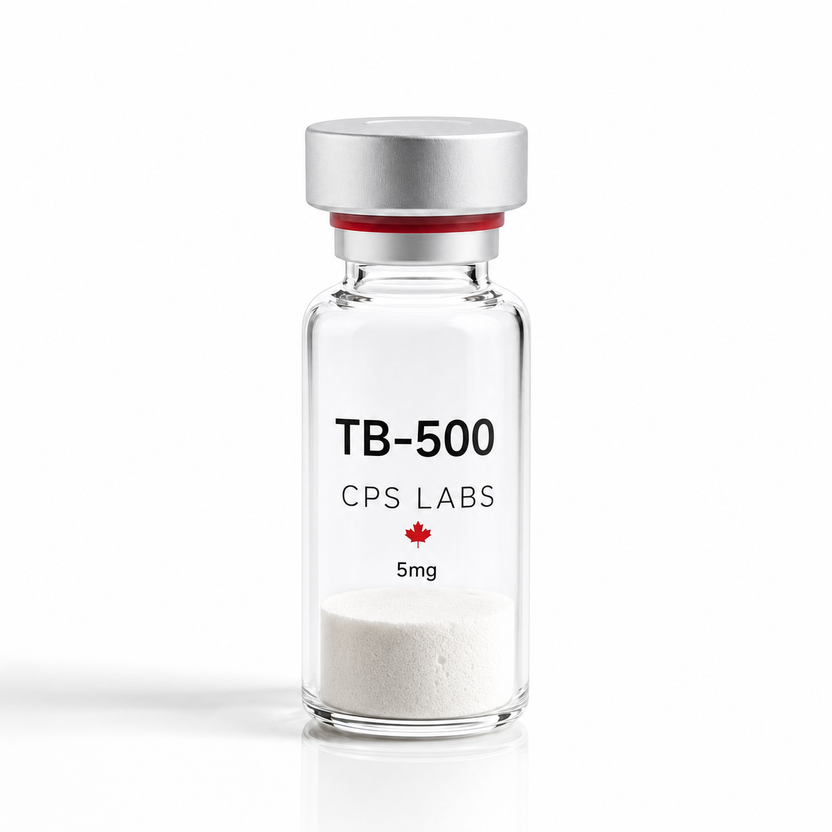
Canada Peptide Supply offers TB-500 in 5 mg and 10 mg lyophilized vials, verified at ≥99% purity by HPLC and mass spectrometry. We also carry the pre-blended BPC-157 + TB-500 stack for researchers studying both pathways simultaneously. TB-500 has not been approved by Health Canada for human therapeutic use and is sold strictly for in-vitro research.
Research Use Only Disclaimer: All information on this page is provided for scientific reference purposes. Canada Peptide Supply does not provide medical advice. TB-500 is sold strictly for in-vitro laboratory research by qualified investigators. It is not approved by Health Canada for human consumption, diagnosis, treatment, or prevention of disease.
